
Do you know your single points of failure?
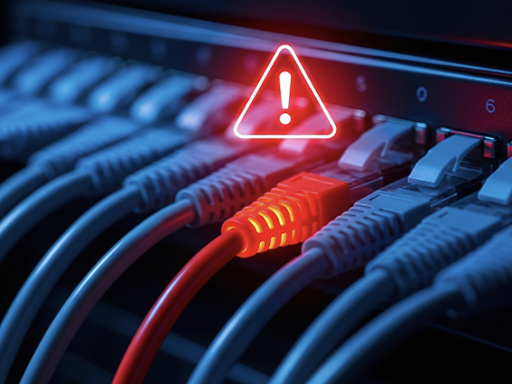
IT is so embedded in our lives these days that we don't even notice how much we rely on it, until it stops working. This is true in both our personal and business lives, and it is only when something stops working that we notice how much we either rely on it or simply use it for our day to day activities.
So what is a single point of failure?
A single point of failure is usually a bit of equipment, that when it fails, it can affect an organisation. For example, a business often relies on a computer network, so if a network switch (the bit that allows computers to connect to the wired network) were to fail, all of the devices that connect to it, would lose their network connectivity, so it is often a really good idea to understand all of the single points of failure and work out what you could do to mitigate any failures.
Different failures can have different levels of impact depending on how wide the failure impacts people, the failure can be something that impacts one person, some people or all people.
These are some of the things to consider:
- Internet connectivity - Most businesses use cloud based services, relying on internet connectivity to be able to access services. If a business loses its internet connection it would typically impact everyone.
- Network connectivity - if you don't have a working network, it has the same impact as losing the internet, this is applicable to both wired and wireless networks.
- Power cuts - if there is no power, it is difficult to work with electronic devices
- Power surges - if there is inconsistent power, it can damage equipment, resulting in a costly replacement process
- Data - loss of critical data that has not been backed up
- Security - protecting access to your business and data
-
Work spaces - if you lose access to your work space, either through flood, fire or evacuation, what is the impact
A lot of these can be mitigated with some simple planning such as:
- Internet - having a secondary internet connection using mobile or satellite data that can be used if your primary connection fails.
- Network - factor in some additional capacity into your network infrastructure, have more than one network switch with enough capacity that if one switch fails there is enough capacity in the remaining switches to move the connections to it until a replacement device can be installed.
- Power cuts and power surges - these can be mitigated with individual UPS (uninterruptible power supplies) which have built in surge protection, this can provide enough time for data to be saved and computers to be shut down in the event of a long power outage. Alternately, more robust, building wide power solutions could be implemented to keep the office running in the event of a power outage, using the ability to generate power using a generator to power the battery backup powering the building.
- Data - a lot of data is business critical, but a lot of businesses find out too late that a lot of what is critical, is not protected or protected sufficiently. Cloud storage is not a backup, it is just using someone else's storage infrastructure elsewhere, it doesn't mean data is backed up so if the cloud provider has an incident, your data is not typically backed up so you could lose it, unless you have a separate dedicated backup.
- Security - this is both physical and logical, utilising physical measures such as locks and access controls and logical, using tools like anti-virus, anti-ransomeware, user access controls, multi-factor authentication and role based access controls, granting staff access only to what they need.
- Work space - one thing that Covid resulted in was businesses adopting work from anywhere allowing the majority of businesses to continue to function even remotely, however this is not always the case, especially with work spaces that are used for manufacturing, and alternate locations in the event of an incident that prevents access should be identified.
The above list is just a few things to consider for starters. We have a vast wealth of experience, having helped businesses plan for unforeseen issues, mitigating against single points of technology failure and business continuity planning (BCP) and disaster recovery (DR). If you would like more information, please call us on 01722 411 999 and we would be happy to help.