
Why IT Security Is the Business Equivalent of House Insurance and Smoke Alarms
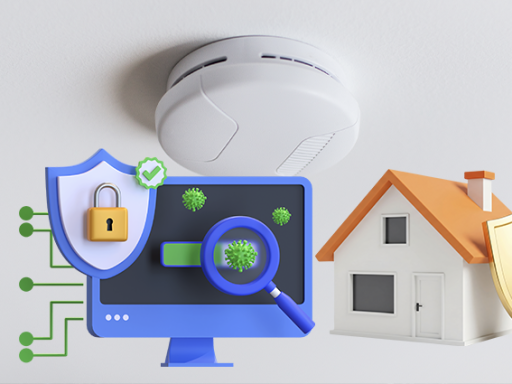
I know the article title is a bit "out there" but bear with me, it'll make sense, I promise.
We all buy house insurance, pretty much
You do not buy house insurance because you expect your home to burn down. You buy it because you understand that accidents, fires, floods, theft and unforeseen events can happen — and if they do, you want to be protected. In the UK, you are not legally obliged to insure the building if you own it outright, but most people still choose to do so because the risk of being uninsured is simply too great.
The same thinking applies to a smoke alarm. You do not install one because you are planning for a fire. You install one because it gives you early warning, buys you time, and may prevent a bad situation from becoming a disaster. It is a small, sensible precaution that most people take without debate.
So why do so many businesses take a different attitude towards IT security?
Cyber security is not paranoia — it is preparation
Businesses protect their buildings, stock, vehicles, staff and customer records from events they hope will never happen. They lock doors, install alarms, insure assets and back up important paperwork. Yet when it comes to IT, some organisations still wait until something goes wrong before they act.
That approach is risky because cyber incidents are not rare, distant or theoretical. The UK Government’s Cyber Security Breaches Survey 2025 reported that 43% of businesses identified a cyber security breach or attack in the previous 12 months, with phishing remaining the most common and disruptive type of attack among affected organisations. The National Cyber Security Centre also warns that small organisations are not too small to be targeted and recommends practical steps such as backups, malware protection, stronger passwords and phishing awareness.
In other words, cyber security should not be seen as an optional luxury. It is the digital equivalent of locking the front door, fitting smoke alarms and making sure your insurance is in place before you need it.
The many doors hackers can try
A house has more than one way in: the front door, the back door, windows, the garage, the letterbox or even a spare key left in the wrong place. A business IT environment is similar. Attackers look for weaknesses across a range of “attack surfaces” — the different routes they can use to gain access, deliver malware, steal information or disrupt operations.
- Email: Phishing emails remain one of the most common ways attackers get in. A convincing message can trick someone into opening a malicious attachment, clicking a fake login page or approving a fraudulent payment.
- Websites and browser-based payloads: A compromised website, malicious advert or fake download can deliver malware or steal credentials without the user realising what has happened.
- Unknown media: USB drives, memory cards or other removable devices can carry infected files. Something plugged in “just to check what is on it” can quickly become a route into the network.
- Weak or reused passwords: If staff reuse passwords across systems, one leaked password can become the key to multiple accounts.
- Unpatched software: Out-of-date operating systems, applications, plugins and devices can contain known vulnerabilities that attackers already know how to exploit.
- Remote access and cloud services: Poorly protected remote access, cloud storage or collaboration tools can expose business data if accounts are not secured properly.
None of these risks require a business to be especially large, famous or wealthy. Attackers often look for easy opportunities. If one organisation has weak defences and another has basic protections in place, criminals will usually choose the easier target.
Basic protection makes a big difference
Good IT security does not always mean expensive, complicated technology. Much like a smoke alarm, many of the most useful controls are simple, practical and preventative. They are designed to reduce the chance of an incident and limit the damage if one occurs.
- Use multi-factor authentication on email, remote access, cloud systems and important business accounts.
- Keep devices, servers, websites and applications updated with security patches.
- Install and maintain reputable endpoint protection on computers and laptops.
- Back up critical data regularly and test that backups can be restored.
- Train staff to recognise suspicious emails, links, attachments and payment requests.
- Restrict the use of unknown USB drives and removable media.
- Review website security, hosting, plugins and administrative access.
- Create a simple incident response plan so the business knows what to do if something goes wrong.
The goal is not to create a fortress that nothing can ever penetrate. The goal is to make your business harder to attack, faster to recover and less likely to suffer serious financial, operational or reputational damage.
Why protect your home but leave your business exposed?
Most people would not cancel their house insurance because they believe a fire, flood or burglary is unlikely. They would not remove their smoke alarms because they have never had a fire before. They understand that protection is there for the day they hope never comes.
The same logic should apply to your business IT. Cyber threats are not less likely than a house fire; for many businesses, they are far more likely. Email scams, malicious websites, infected files, stolen passwords and vulnerable systems are everyday risks. Ignoring them does not make them disappear — it simply means you are hoping nothing happens.
Cyber security is not about expecting the worst. It is about being responsible, prepared and resilient. You protect your home from unforeseen risks because the consequences of being unprotected are too serious. Your business deserves the same level of care.
Do not wait until after the incident to wish you had acted sooner. Put the right protections in place now — not because you expect disaster, but because you want your business to be safe rather than sorry.
Call us on 01722 411 999 for more information about how to secure your business from threats.