
Your Staff Are Now the Weakest Link: How AI Is Making Social Engineering Attacks Smarter
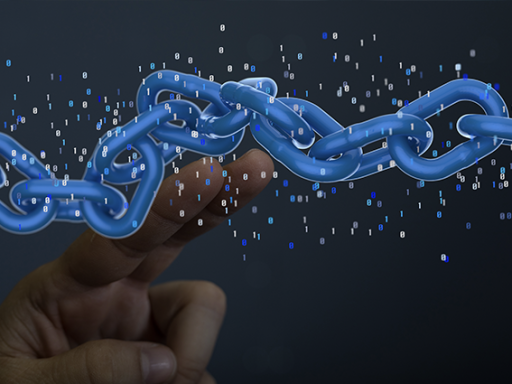
AI-powered phishing, voice cloning and business email compromise are changing the cyber threat landscape for UK businesses. While firewalls, endpoint protection and password policies still matter, attackers are increasingly bypassing technical controls by targeting people instead. Social engineering attacks have become faster, cheaper and far more convincing because AI helps criminals write credible messages, imitate trusted voices and personalise scams at scale.
The biggest shift is not just in the technology, but in how it is used to manipulate behaviour. Modern AI scams use social engineering to condition victims over time, building familiarity, credibility and urgency across email, phone calls, messaging platforms and video meetings. Instead of relying on one obvious phishing email, attackers can now create believable multi-step conversations that feel like normal business activity.
How AI is making social engineering attacks more effective
Traditional phishing used to leave clues: poor grammar, odd phrasing, generic greetings and obvious formatting mistakes. AI strips many of those warning signs away. Criminals can generate fluent, professional language in seconds, translate it into different languages, tailor it to a specific department and even mirror the writing style of a manager, supplier or customer. Voice cloning and deepfake tools take this a step further by recreating trusted identities in phone calls, voicemails and video meetings.
This matters because social engineering works by exploiting human instincts: trust, helpfulness, speed and fear of getting something wrong. AI amplifies each of those triggers. It allows attackers to test different messages, refine what works and run campaigns across email, SMS, collaboration platforms and phone calls. According to the 2025 Verizon Data Breach Investigations Report, the human element remains involved in around 60% of breaches, underlining how often people are still the route in for attackers. It is also why AI is such a force multiplier for fraud and compromise.
Examples of AI-powered scams affecting businesses today
- Executive impersonation and payment fraud: Attackers use AI-written emails or cloned voices to pose as senior leaders and push urgent payment requests. In one widely reported 2024 case in Hong Kong, a finance employee was deceived during a fake video call involving deepfake identities of executives and transferred roughly US$25 million.
- Voice cloning and vishing: Criminals can create realistic voice clones from short public audio clips, then call staff pretending to be a director, supplier or colleague. These calls are designed to bypass caution by sounding familiar and authoritative.
- Helpdesk and password reset manipulation: Social engineering groups increasingly target support desks, persuading staff to reset credentials or MFA methods. Recent UK reporting around major retail incidents has highlighted how operational teams and helpdesks can become prime targets when attackers want the easiest path in.
- Fake recruitment and job scams: AI-generated recruiter profiles, job descriptions and follow-up messages make employment scams look highly credible. These are used both to steal personal data and to move conversations onto less secure channels where victims are easier to manipulate.
- Supplier and invoice fraud: AI helps attackers mimic real suppliers, past invoice language and purchasing patterns, making payment diversion emails far more believable than the old “change our bank details” scam.
Why AI social engineering scams work: the conditioning effect
The most effective social engineering attacks are rarely a single message out of nowhere. They are staged. An attacker may first connect on LinkedIn, then send a harmless email, then reference a real supplier, project or meeting, and only later introduce the request—click this link, share that code, approve this payment, reset that account. AI makes that process easier to scale because it can maintain consistent language, remember context, adapt responses and keep the conversation feeling natural.
This is what conditioning looks like in practice: repeated contact that lowers suspicion, use of familiar names and systems, carefully timed urgency, and an appeal to routine business behaviour. The victim is not simply tricked—they are guided. By the time the harmful request arrives, it may feel consistent with everything that came before. That is why experienced, intelligent employees still get caught out. These attacks are designed to exploit normal behaviour, not ignorance.
How businesses can reduce the risk of AI-powered social engineering
- Train for modern scams, not old phishing clichés. Staff need to recognise AI-polished messages, voice impersonation, fake urgency and multi-step manipulation—not just spelling mistakes.
- Introduce robust verification processes. Payment changes, password resets, sensitive file requests and MFA changes should always require a second channel of verification.
- Protect your public footprint. The more detail attackers can gather about your people, projects and structure, the more convincing their lures become.
- Support your helpdesk and frontline teams. These teams are often targeted because they are helpful, busy and operationally critical. Give them scripts, escalation paths and permission to slow things down.
- Use layered controls. Awareness matters, but it cannot stand alone. Pair training with strong identity controls, conditional access, phishing-resistant MFA and monitoring for unusual account activity.
The uncomfortable truth is that employees are now on the frontline of cyber security. They are being targeted by AI-powered phishing, deepfake fraud, vishing and business email compromise attacks that are engineered to look legitimate and feel routine. For organisations, that means cyber security can no longer focus only on systems and software. It must also address human trust, verification processes and the ways social engineering attacks manipulate behaviour over time.
If your business wants to reduce cyber risk in the AI era, start by recognising that the threat has changed. Today’s attackers do not just exploit software vulnerabilities—they exploit people, processes and trust. The most vulnerable employee is often not the careless one, but the conscientious member of staff facing an AI-enabled scam that sounds credible, looks familiar and arrives at exactly the wrong moment.
How does this impact my business?
Threats are evolving at a rapid pace and a lot of traditional security tools are keeping pace, making some organisations that rely on basic security measures vulnerable. If you have been impacted by an AI scam or would like advice or more protection measures, call us on 01722 411 999